In today’s fast-paced industrial landscape, Precision Motion Control Systems have emerged as vital components in enhancing automation and improving productivity. These systems are designed to provide precise control over mechanical movements, significantly mitigating issues related to accuracy and efficiency. With businesses continually striving to increase operational effectiveness, having a reliable motion control system can lead to a measurable increase in output quality and process speed. In fact, a well-implemented motion control solution can enhance throughput by up to 25%. This article aims to explore the intricacies of Precision Motion Control, delve into the factors to consider when selecting a motion control system, and address some common user concerns.
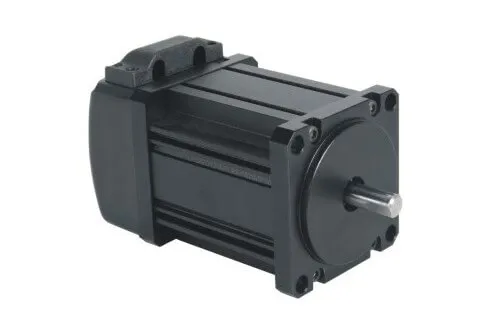
Precision Motion Control refers to the technology that enables the precise regulation of physical motion in various machines or processes. It utilizes various mechanisms, such as servos, stepper motors, and programmable logic controllers (PLCs), to achieve high levels of accuracy and repeatability. The ability to execute movements with minimal deviation rates, often within ±0.01 mm, is crucial for industries reliant on detailed assembly processes or intricate manufacturing tasks.
The terminology associated with motion control includes terms such as open-loop control, where the input is set without feedback, and closed-loop control, which continuously monitors the output for adjustments. Understanding these terms helps users better appreciate system specifications and their implications.
Precision Motion Control Systems find applications across various sectors, including:
These applications highlight the flexibility and essential role of motion control systems across diverse industries.
The significance of Precision Motion Control Systems is underscored by several inherent advantages:
Increased Accuracy: With systems capable of moving within a deviation range of ±0.01 mm, manufacturers can produce high-quality products consistently.
Enhanced Efficiency: Automation through these systems can reduce cycle times by up to 30% when compared to manual processes.
Cost Reduction: Improved precision reduces waste and rework, leading to an overall cost savings of an estimated 20% in high-volume production runs.
Flexibility: Precision Motion Control Systems can be easily reprogrammed for multiple tasks, accommodating changing production needs without requiring significant downtime.
Understanding these advantages can help users make informed decisions when choosing the right motion control system for their processes.
If you’re looking to dive deeper into the world of Precision Motion Control Systems, it is recommended to consult detailed user guides available from suppliers. The brand Power Jack Motion offers in-depth resources that elucidate product specifications, installation processes, and troubleshooting tips. You might also want to schedule demonstrations to see how these systems can be integrated into your operations effectively.
1. What factors should be considered when selecting a motion control system?
2. Can motion control systems be customized?
3. What maintenance is required for motion control systems?
Explore the professional potential of Precision Motion Control Systems today and see how they can redefine efficiency standards in your operational setups.


![The Fundamentals of Motion Control System [Infographic]](http://image.chukouplus.com/upload/C_5643/file/20241209/44da20170c778f300de18bb89cfa520b.jpg?x-oss-process=image/format,webp,image/resize,m_pad,h_381,w_508,color_FFFFFF&1 "The Fundamentals of Motion Control System [Infographic]")
