In industrial production processes, pumps and fans are widely used, and these types of equipment consume a significant amount of electrical energy, accounting for a large proportion of an enterprise's total energy consumption. Therefore, to enhance their competitiveness, enterprises must optimize production technologies and processes, reduce energy consumption during production, lower costs, and improve the price competitiveness of their products.

Energy savings for fans and pumps through variable frequency technology can be achieved via two main approaches: soft-start energy saving and variable frequency speed control energy saving. The principles of these two energy-saving methods are explained in detail below:
Traditional motors typically use direct-on-line or star-delta starting methods, with starting currents reaching 4 to 7 times the rated current. Such high inrush current causes severe impacts on the power supply grid and electromechanical equipment. It not only imposes high demands on the power supply capacity but also damages equipment such as valves and dampers, shortening their service life. After installing a variable frequency drive, its soft-start function allows the starting current to ramp up smoothly from zero, effectively limiting it within the rated current. This significantly reduces the impact on the power grid, extends the service life of valves and related mechanical equipment, and lowers maintenance costs.
According to fluid dynamics principles, there is a relationship between the shaft power (P), pressure or head (H), and flow rate (Q) of pumps and fans. For centrifugal loads, the shaft power P is approximately proportional to the cube of the rotational speed N (P ∝ N³), while the flow rate Q is proportional to the first power of the rotational speed N (Q ∝ N). When the required flow rate decreases, reducing the motor speed via the VFD causes the shaft power to decrease substantially in a cubic relationship with the speed, resulting in significant energy savings. For example, when the flow demand drops to 80%, the speed reduces correspondingly to 80%, and the theoretical power consumption can drop to approximately (0.8)³ = 51.2%, demonstrating immense energy-saving potential.
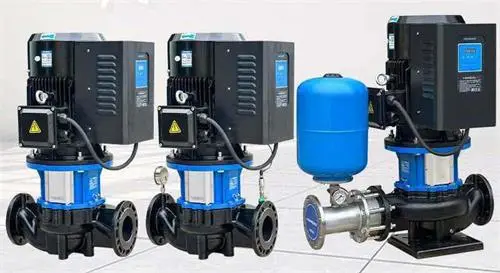
Variable frequency speed control technology is not only an efficient means of regulating flow and pressure but also the core of achieving economical operation for fan and pump systems. Its application advantages are reflected at multiple levels:
● Precisely Matching Process Requirements, Eliminating Waste: Traditional methods for controlling air volume or flow often use dampers or valves for throttling regulation. This essentially changes the output by increasing pipeline resistance while the motor continues to run at high speed, wasting a large amount of electrical energy in overcoming this resistance. Variable frequency speed control changes the output by directly altering the motor speed, ensuring the system output always precisely matches the actual process requirements, preventing energy loss at the source.
● Improving Process Control Quality: VFDs enable continuous, smooth adjustment of motor speed, leading to more precise and stable control of process parameters like flow and pressure. This enhances the controllability of the production process and product quality.
● Improving System Operating Conditions: Soft starting avoids inrush current, protecting both the power grid and mechanical transmission systems (such as belts, bearings, and gears). Simultaneously, smooth operation reduces mechanical wear, vibration, and failure rates of the equipment.
● Adapting to Complex Control and Intelligence: Modern VFDs can be easily integrated with control systems like PLCs and DCSs to implement complex functions such as cyclic soft starting/stopping of multiple pumps, parallel operation, and closed-loop automatic control of pressure/flow. This lays the foundation for building intelligent, networked energy-saving systems.
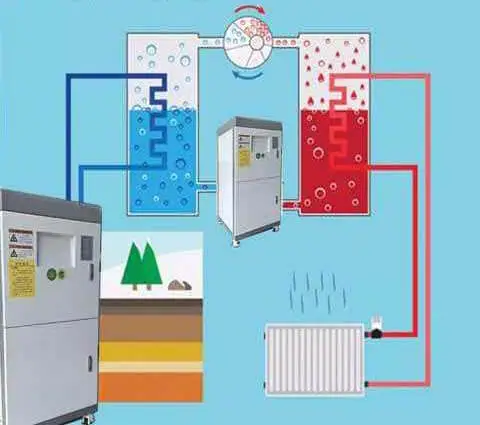
The benefits of variable frequency speed control technology are particularly pronounced in the following scenarios:
● Central Air Conditioning Systems: Implementing variable frequency control for chilled water pumps, condenser water pumps, and cooling tower fans based on actual cooling load can typically achieve comprehensive energy savings of 30%-50%.
● Industrial Circulating Water Systems: In industries like metallurgy and chemicals, retrofitting circulating water pumps with VFDs to adjust flow based on process temperature requirements yields significant energy savings.
● Boiler Forced-Draft and Induced-Draft Fan Systems: Automatically adjusting air volume based on boiler load, replacing traditional damper control, not only saves energy but also helps stabilize combustion and improve boiler efficiency.
● Municipal Water Supply Networks: Using variable frequency speed control to achieve constant pressure water supply avoids the energy waste and pressure fluctuations associated with traditional constant-speed pumps combined with pressure tanks.
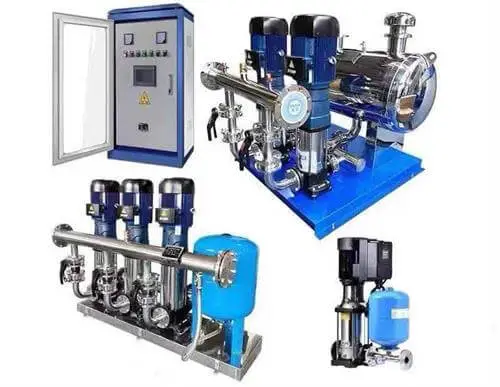
To fully realize the energy-saving benefits of variable frequency speed control, the following points should be considered during implementation:
● System Analysis and Selection: Not all operating conditions are suitable for VFD retrofitting. A detailed analysis of the equipment's operating characteristics and load variation range is necessary to select the appropriate VFD model and power rating. For higher-power fans and pumps, potential harmonic issues generated by the VFD should also be considered, and filtering devices should be installed if necessary.
● Control Strategy Optimization: Simple open-loop V/F control might not meet high-performance requirements. For applications requiring high dynamic response or high starting torque, more advanced control modes like vector control should be considered.
● Ensuring Motor Protection: When operating at low speeds for extended periods, the heat dissipation capacity of standard motors decreases. Attention must be paid to motor temperature rise, potentially requiring the use of dedicated inverter-duty electric motors or enhanced cooling.
Practice has fully demonstrated that applying variable frequency speed control technology to pump and fan equipment can yield remarkably significant benefits in energy savings, operational efficiency, and maintenance cost reduction. It is a mature, highly efficient, and cost-effective speed control method with a short payback period. It not only improves the operating efficiency of individual devices but also optimizes the energy efficiency of the entire process from a system perspective. With the advancement of the "Dual Carbon" goals and the continuous rise of energy costs, variable frequency speed control technology, as a core method for industrial energy conservation, will see its importance grow increasingly prominent, continuously driving enterprises toward greener, more efficient, and more intelligent production models.

